Special Projects
Restoration of the Great West Window
Later this year, major restoration work will be carried out on our magnificent West Nave window.
Heritage news
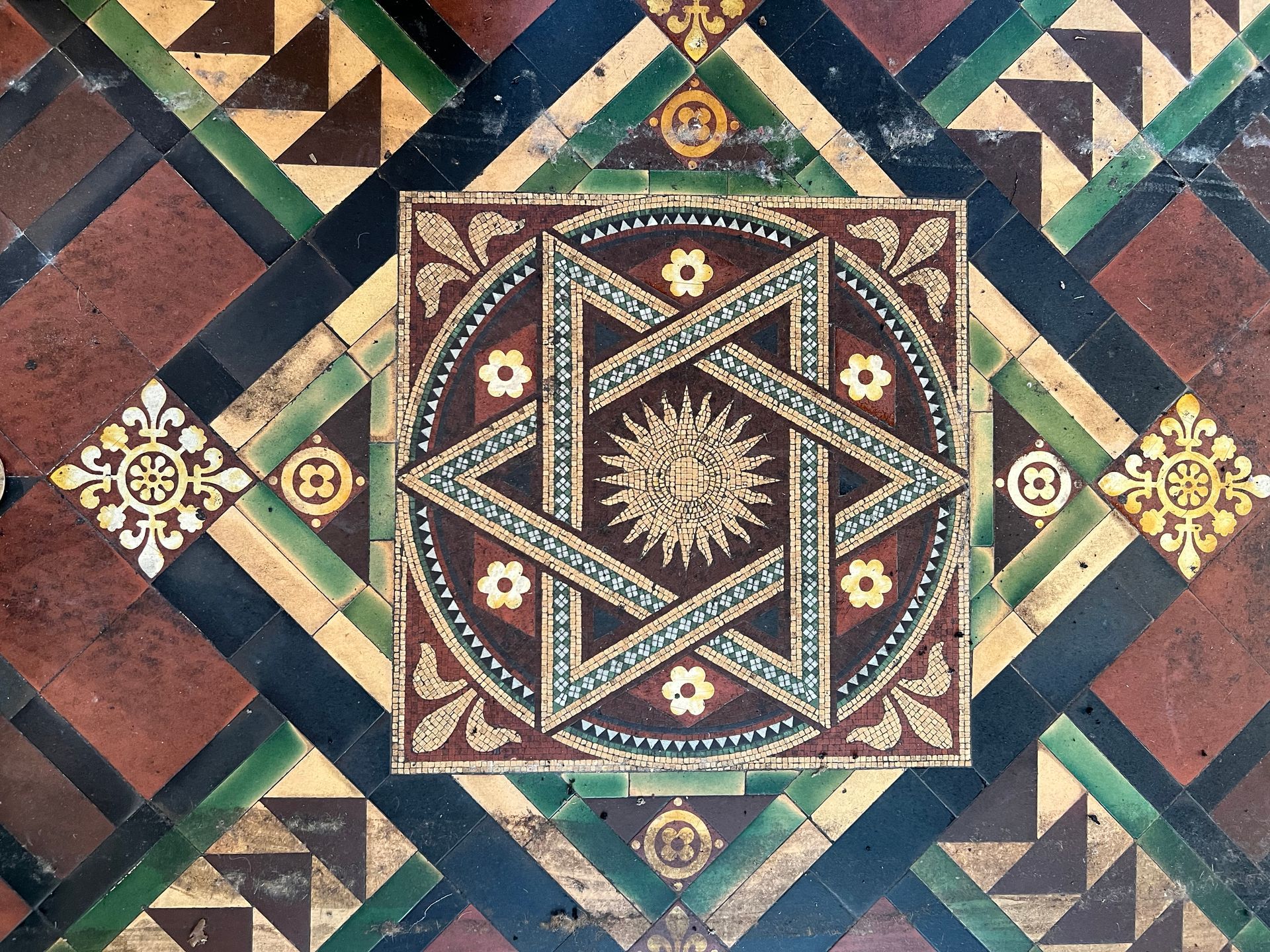
The Freemasons’ Patronage and the Encaustic Tile Pavement of 1869 1. Introduction The restoration of St Mary Redcliffe in Bristol during the nineteenth century stands as one of the great parochial undertakings of the Victorian era. Spanning more than three decades, the effort to rescue what Queen Elizabeth I famously pronounced ‘the fairest, the goodliest, and the most famous parish church in England’ from the threat of irreversible ruin drew upon the energies of the civic authorities, the clergy, and a wide network of private subscribers. Among those who contributed most consistently and substantially to the work were the Freemasons of the Province of Bristol, whose involvement in the restoration of the Lady Chapel culminated in the laying of a magnificent encaustic tile pavement in 1869 — the crowning act of their patronage, and the finishing touch to one of the most distinctive spaces in the entire church. This report traces the history of the Lady Chapel from its medieval foundation through its pre-restoration condition, examines the principles that guided the Victorian restoration with particular attention to the east end of the building, and gives a detailed account of the Freemasons’ role in restoring and beautifying the chapel. It describes the encaustic tile pavement — its design, manufacture, and the firm of Maw & Co. that made it — and draws on contemporary newspaper reports and journals to convey how the work was received at the time. 2. Foundation and Early History of the Lady Chapel The Lady Chapel at St Mary Redcliffe occupies the easternmost projection of the church, forming a distinct architectural unit beyond the high altar. Its dedication to the Blessed Virgin Mary — ‘Our Lady’ — reflects the universal medieval devotion to the Virgin, and its establishment as a separate, enclosed space followed the common chantry practice of the thirteenth and fourteenth centuries, when wealthy patrons endowed chapels where priests could pray perpetually for the souls of the founders and their families. The church itself underwent substantial rebuilding in the thirteenth and fourteenth centuries, and was largely brought to its present magnificent form through the munificence of William Canynges the younger (c.1399–1474), the Bristol merchant and mayor, who is traditionally credited with much of the fifteenth-century work. When the Restoration Committee addressed the Mayor of Bristol in 1846 at the laying of the first stone of the Victorian restoration, they drew an explicit parallel between Canynges and the incumbent mayor: ‘Upwards of 400 years ago, a princely citizen of Bristol erected this church:—to-day, you, another citizen, commence its renewal; and may it be considered a singular and interesting coincidence in favour of your fitness for the task, that the office of chief magistrate was held by Canynges six years, and that you have been already called thereto three times.’ 1 The Lady Chapel, with its slender proportions and elegant Perpendicular detailing, was among the finest parts of this medieval ensemble. It contained important brasses and monuments, including a fine brass of Sir John Inyn set in the north-east corner, and was furnished with an altar and screen that marked it out as a place of distinct liturgical significance within the wider church. 2 3. The Lady Chapel Before the Victorian Restoration By the early nineteenth century, St Mary Redcliffe had fallen into a state of serious dilapidation. The buildings that had long clustered around the church to its north — obscuring many of its finest architectural details — were removed under an Act of Parliament in the early 1840s, exposing the full grandeur of the north front for the first time in centuries but simultaneously revealing, with painful clarity, the precarious condition of the entire fabric. As the Restoration Committee later recorded, the revelation was both a joy and an anxiety: ‘Setting off to the best advantage the treasure we possessed, they at the same time awakened anxiety by showing on how frail a tenure, for useful purposes, it was held.’ 3 The Lady Chapel, tucked at the east end of the church, shared in the general deterioration. The whole condition of the building was described in terms calculated to excite the gravest alarm: pinnacles were tottering, large pieces of stone were constantly falling, and in the chancel one of the walls had gone out, leaving an opening in the dilapidated roof large enough for a man to put his foot through. 4 The Lady Chapel’s vaulted ceiling was darkened and decayed; its floor was without the pavement that would one day distinguish it; and the whole interior, the Committee reported, could ‘vie for beauty of design and perfectness of architectural detail with most of those venerable shrines which travellers from far transatlantic regions come reverentially to visit, and almost to envy the Old World the possession of.’ 5 4. The Victorian Restoration: Guiding Principles and the East End 4.1 The Principles The decision to undertake a full restoration of St Mary Redcliffe was inaugurated at a meeting of the Vestry on 10 May 1842, which resolved that ‘the state of the Church requires their most strenuous exertions to obtain a restoration and substantial repair of this venerable edifice.’ 6 A Restoration Committee was formed, which appointed Mr Thomas Britton and Mr Hosking, professor of architecture at King’s College, London, as the architects. From the outset, the architects were determined to carry out the work according to what the committee described as ‘the legitimate principles and requirements of art.’ The principles adopted were explicitly anti-utilitarian and deeply sympathetic to the original character of the building. The architects stated their position unambiguously: This position held that any restoration of the structural fabric was inseparable from the restoration of its ornamental character: it was, in the committee’s words, ‘utterly repugnant to their feelings to think of any so-called restoration of the substantial strength of the building apart from a restoration of those ornamental adjuncts which constituted its chief beauty, and without which, indeed, the identity of the structure with that which Queen Elizabeth pronounced one of the most famous, absolute, fairest, and goodliest parish churches within the realm of England, would well nigh have been lost.’ 8 This governing philosophy informed all aspects of the subsequent work, including the treatment of the Lady Chapel, which was restored not merely as a structural shell but as a richly ornamented sacred space, furnished with floor, steps, and vaulted ceiling worthy of its architectural setting. 4.2 The East End: The First Priority When Mr Hosking retired from the project in 1845 and was succeeded as joint architect by Mr G. Godwin F.R.S., the committee turned immediately to the structural repair of the building. The very first contracts drawn up, in June 1845, gave priority to the east end of the church. Among the specified works was: This attention to the east end — the liturgical heart of the church, and the setting of the Lady Chapel — was not accidental. The architects recommended that the tower should also receive attention as a priority, but the work on the east end was the most immediately visible expression of the restoration’s ambitions. The total outlay determined on in the first tranche of contracts was £2,297, of which the east end work represented the largest single item. 10 The Lady Chapel, forming the termination of this east end composition, was thus embedded in the very earliest phase of the Victorian restoration programme. 5. The Freemasons and the Restoration of the Lady Chapel 5.1 The Freemasons and the Foundation Stone of 1846 From the very outset of active operations, the Freemasons of the Province of Bristol were invited to participate in the restoration as both symbolic and financial partners. The Restoration Committee’s address to the Mayor at the first stone-laying ceremony on 21 April 1846 explicitly acknowledged the connection between medieval master builders and the Freemasons’ fraternal tradition: The ceremony itself, held on Tuesday 21 April 1846 and reported in the Freemasons’ Quarterly Review, was a considerable civic occasion. The stone to be laid formed part of the last buttress on the north side of the chancel. A procession more than a quarter of a mile long formed on Colston’s Parade, at the head of which marched the police, Pile Street and Redcliffe Free School boys and girls, the working masons with banners, the contractors, the architects, and the Restoration Committee. At the rear walked the Mayor and Corporation, followed by the Fraternity of the Freemasons, approximately two hundred in number. 12 The stone was laid by the Worshipful Mayor, J.K. Haberfield, at twelve o’clock, with William Done Bushell, Deputy Provincial Grand Master, presiding in his Masonic capacity. The Deputy Grand Master then applied the level to the stone, sprinkled corn, wine, and oil upon it, and called upon the architects to exhibit the plans. Mr A.H. Palmer, the Secretary, read aloud the inscription on the stone, and the ceremony concluded with prayer. 13 Addressing the assembly, the Deputy Grand Master declared that Freemasons had an especial duty in aiding such works: ‘To no purpose more noble could we now lend our aid, for as Freemasonry totally discountenances impiety, immorality, and irreligion, so should we lend our warmest efforts to maintain a structure, wherein the ignorant may be taught, the vicious reclaimed, and the great and eternal interests of Godliness promoted.’ 14 The architect Mr Godwin also addressed the gathering, observing that the Freemasons’ historical connection with the building arts gave them a particular appreciation of the task at hand. He noted that there existed ancient documents describing the workmen on the parts of the building relating to the doorway of St Mary Redcliffe, which had been of great value in determining the meaning of many technical expressions, and he trusted that all present would unite to obtain the completion of the building, which would be received by the Restoration Committee as thanks for their past work and encouragement for what they were going to do. 15 5.2 The Freemasons and the Lady Chapel: Three Ceremonial Occasions The Freemasons’ connection with the Lady Chapel itself was traced through three specific ceremonial acts, each marking a stage in their patronage of that part of the building. On 21 April 1846 — the same day as the general restoration stone-laying — Very Worshipful Brother William Done Bushell, Deputy Provincial Grand Master, assisted the Mayor of Bristol in laying, in Masonic form, the north-east corner of the foundation stone of the then intended restoration. 16 On 24 November 1848, the Very Worshipful Deputy Provincial Grand Master — the late Brother William Powell — laid the foundation stone of the Freemasons of Bristol on the re-building of that part of the ancient fabric, by the Lodge ‘Nil Desperandum.’ This ceremony marked the formal adoption by the Province of Bristol of the Lady Chapel as their especial charge within the wider restoration. 17 On 28 August 1861, the culmination of the stonework phase of the Lady Chapel restoration was marked by a Grand Masonic Demonstration reported in full by the Bristol Mirror. Five hundred of the craft, dressed in their splendid regalia, gathered at the church. The Right Worshipful Provincial Grand Master, the late Brother Henry Shute, finally adjusted the last stone of the Lady Chapel with the customary Masonic rites, formally completing the external restoration of the chapel that the fraternity had undertaken. 18 The Freemasons had, by this point, not only restored the external stonework of the Lady Chapel but had also committed to providing funds for ‘the decoration in colour and gilding of the groined vaulting of the chapel.’ This additional gift, recorded in the architect’s report to the Canynge Society’s anniversary meeting in April 1870, demonstrated the breadth of the fraternity’s patronage: they were responsible not merely for structural work, but for the furnishing and embellishment of the chapel as a whole. 19 5.3 The Canynge Society and the Anniversary of 1870 The Canynge Society, established in 1848 to promote the restoration of St Mary Redcliffe, held its annual anniversary in the month of November each year. In November 1869, however, the meeting was postponed because the Vicar was suffering from illness, and the anniversary was instead held on 21 April 1870 — a date chosen to coincide with the anniversary of the first stone-laying of 1846. The occasion was reported at length in the Freemasons’ Magazine and Masonic Mirror. The assembly was an impressive one. The Freemasons assembled in Cadena’s rooms about a quarter past twelve o’clock, headed by the Provincial Grand Master, with the Bishop of Limerick and other officers holding high rank in the district forming a procession which entered the church at the west door. The principal officers of the fraternity were allotted seats on the north side of the nave; the congregation filled the south transepts. The Mayor and Mayoress were also in church, the Mayor in his robes and gold chain of office, with the Aldermen and other leading inhabitants of Bristol. The sermon was preached by the Reverend R.J. Simpson M.A., rector of St Clement Danes and Provincial Grand Chaplain of the Freemasons of England. 20 In his address to the fraternity, the Provincial Grand Registrar, Bro. Bramble, read the following document to the Vicar and Churchwardens of St Mary Redcliffe: The Lord Bishop of Limerick, in accepting the gift on behalf of the diocese, thanked the Freemasons with warmth: ‘I desire humbly but profoundly to recognise the good spirit that is working in the hearts of the honourable body of men on my right hand (the Freemasons). As Bishop, I profoundly thank you, and may the blessing of God Almighty, the Father, the Son, and the Holy Ghost rest upon this work, and upon those who have taken part in this work, and upon their families, now and evermore.’ 22 6. The Encaustic Tile Pavement of 1869 6.1 The Laying of the Pavement The encaustic tile pavement of the Lady Chapel was completed in 1869, the final and most visually striking element of the Freemasons’ contribution to the chapel’s furnishing. The tiles were laid at the cost of the Freemasons of Bristol, with Mr William Powell acting as their representative in commissioning the work. The pavement was noted in the press almost immediately upon its completion. The Church Chronicle of 1 November 1869 recorded the event succinctly in its ‘Church Building Record’ section: ‘A handsome pavement of encaustic tiles has been laid in the floor of the Lady Chapel of St. Mary Redcliffe Church, at the cost of the Freemasons of that city.’ 23 6.2 Design and Character of the Pavement The most detailed contemporary account of the pavement appeared in The Builder on 16 October 1869, which devoted a note specifically to ‘The Pavements’ at the Lady Chapel: This description reveals the careful thinking behind the design. The pavement was not a mere copying of medieval tile patterns, but a considered attempt to capture the ‘spirit’ of ancient encaustic work — its visual character and textural quality — while acknowledging that it was a Victorian creation. The deliberate roughness in the body of the tile, which caused the surface colour to register in a slightly irregular and varied way, was a technique intended to avoid the too-perfect, mechanical appearance that mass production might otherwise produce. This concern for authenticity of character over mere exactitude of reproduction was entirely consistent with the broader restoration principles adopted for St Mary Redcliffe, which required that the work be ‘accordant with the legitimate principles and requirements of art.’ 25 The floor was composed of tiles in combinations of yellow, green, and black. In addition to the general tile pavement, the Lady Chapel contained a particularly notable piece of mosaic work. As the guidebook How to See Bristol (1874) noted, the steps to the chapel were of Devonshire marble, and ‘amid the tiles is a gem of modern mosaic work, containing above 1,000 pieces in its two square feet.’ 26 This intricate mosaic centrepiece gave the pavement a focal point of exceptional craftsmanship within the broader field of encaustic tiles. The architect’s report to the Canynge Society anniversary of 1870 confirmed the nature of the work: ‘In the Ladye Chapel a tile pavement, with marble steps, has been laid down at the cost of the Freemasons of Bristol, by whom the external stonework of the chapel had been previously restored. The same body, mindful of their connection with the building guilds of the middle ages, have also provided funds for the decoration in colour and gilding of the groined vaulting of the chapel, which will, it is hoped, be completed by the day fixed for the meeting.’ 27 6.3 Manufacturer and Execution The tiles were manufactured by Messrs Maw & Co., and The Builder recorded that the pavement was ‘executed under the general directions of Mr. Godwin, in their London showroom by Mr. H. Simpson, one who have lately given special attention to the introduction of this class of work.’ 28 The London firm of W.B. Simpson & Sons, whose name recurs in the archive documents relating to the chapel tiles, was closely associated with Maw & Co.’s output and undertook the laying of encaustic pavements in ecclesiastical settings across England during this period. The Rev. R.J. Simpson, who preached at the 1870 anniversary ceremony, was himself a Fellow of the Order and the rector responsible for the tile design, and his thanks to the fraternity at that meeting suggest a close personal involvement with the commission. 29 7. Maw & Co.: The Tile Manufacturers The firm responsible for the Lady Chapel tiles, Maw & Co., was by the time of the commission one of the most celebrated encaustic tile manufacturers in Britain. The company was formed in 1850 by George Maw and his brother Arthur when they bought an ailing tile business in Worcester. They quickly gained a reputation for their encaustic ‘Mock-Mediaeval’ tiles, though they had to contend with the same difficulty as the company they had acquired: the local Worcestershire clays were unsuitable for their purposes, and materials had to be brought in at great expense from Shropshire. In 1852 they relocated to Shropshire, establishing themselves at the Benthall Works at Broseley, where they could make use of the local clay as well as coal for their kilns. At first the company barely covered its expenses, and full commercial production of encaustic tiles did not begin until 1857. A few years later, however, encaustic tiles had become the height of fashion. Maw & Co. were among the first to use six and more colours in a single tile. In 1862 a patent mosaic tile was introduced. 30 By the time the Lady Chapel pavement was commissioned in 1869, the firm had expanded greatly and was producing an enormous range of products alongside their encaustic floor tiles: majolica glazes (from the early 1860s), faience, transfer printed and hand-painted picture tiles, relief tiles, and gilt tiles with the entire design executed in gold. The range and quality of their output had made Maw & Co. indispensable to the Victorian church restoration movement, and their tiles were to be found across the country in the pavements, sanctuaries, and chapels of restored medieval buildings. By the 1880s, Maw & Co. had become one of the most influential and important tile manufacturers in Britain. To meet increasing demand they introduced steam-driven tile presses and in 1883 moved to new and larger premises at Jackfield in Shropshire, covering five acres with every convenience in services and layout. At the height of the tile boom the company produced over 20 million tiles a year, and lavishly printed catalogues listing ‘persons and establishments supplied’ ran to five pages, including the Royal Family, Alexander II of Russia, two maharajas, nine dukes, twelve earls, the railway companies, thirteen cathedrals, thirty-six hospitals, fifty-three public buildings, nineteen schools and colleges, and five warships. 31 By the end of the nineteenth century, Maw & Co. was the largest tile factory in the world. Art Nouveau designs were followed by unique Art Deco geometric styles in the twentieth century, but the recession at the end of the First World War and building restrictions in the decade following the Second World War were very detrimental to tile production at Jackfield, and the factory finally closed in January 1970. 32 The Jackfield site has since been preserved as Maws Craft Centre, which houses arts, crafts, and design businesses, as well as a café, offices, and a holistic studio, and serves as a tangible reminder of the firm’s enormous Victorian legacy. 8. Contemporary Reception The reception of the encaustic tile pavement in the contemporary press was warm, though the reporting was often brief — the work being treated as the fitting completion of a long-anticipated restoration rather than as a novelty requiring extended commentary. Taken together, however, the available notices reveal a consistent sense of admiration for the quality and character of the work. The most detailed technical notice appeared in The Builder of 16 October 1869, which offered a practitioner’s appreciation of the pavement’s distinctive qualities, particularly its avoidance of the too-mechanical regularity that was a perceived weakness of many Victorian encaustic tile pavements. The journal’s description of the tiles as being ‘especially made with a roughness in the body, which produces duplicated patterns in the surface colour and prevents the patterns from being too mechanical and true, giving them the spirit of the ancient work’ was a significant endorsement: The Builder was the foremost professional journal of the construction industry and its judgements carried weight with architects and craftsmen across the country. 33 The Church Chronicle of 1 November 1869, a publication aimed at a clerical readership, took note of the pavement in its ‘Church Building Record’ column, where it appeared alongside notices of new churches and chancel restorations across England. The brief but positive notice — ‘A handsome pavement of encaustic tiles’ — placed the Lady Chapel work in the context of the wider national programme of church restoration that characterised the mid-Victorian decades. 34 The Bristol Times and Mirror of 22 October 1869 also carried a report noting the completion of the tiled floor and its colours, recording the civic and local significance of the achievement. The Western Daily Press of 21 April 1870 reported on the Canynge Society’s anniversary ceremony at which the Freemasons formally presented the completed chapel to the church, covering both the formal proceedings and the speeches in which the quality and significance of the work were discussed. 35 The Freemasons’ Magazine and Masonic Mirror of 30 April 1870 offered the most expansive and eloquent assessment, in the words of the architect’s report read to the assembled Canynge Society meeting. Speaking of ‘his beautiful pavement on which we stand, for that noble roof which is over our heads,’ the report gave voice to the pride and satisfaction of all who had contributed to the restoration of the chapel. The Rev. R.J. Simpson, in returning thanks, declared that he rejoiced greatly to see his brother Freemasons so forward in respect to the restoration of the church, and in conclusion promised a small personal donation ‘as a memorial of one of the happiest days of his life.’ 36 By the time How to See Bristol appeared in 1874 as a guidebook for visitors, the encaustic floor had already become one of the details that the informed visitor was expected to seek out. The guidebook singled out the Lady Chapel mosaic as ‘a gem of modern mosaic work, containing above 1,000 pieces in its two square feet’ — a phrase that captures both the delight that the floor inspired and the pride that Bristol took in the quality of the Freemasons’ gift. 37 9. Conclusion The story of the Lady Chapel’s Victorian restoration is, at one level, the story of the wider restoration of St Mary Redcliffe: a sustained effort by a community of subscribers and patrons to rescue a great medieval building from ruin, guided by principles of architectural integrity and animated by an essentially Victorian conviction that the past was a living inheritance to be preserved and transmitted. At the level of the Lady Chapel itself, however, the story has a distinctive character given to it by the involvement of the Freemasons of the Province of Bristol. The fraternity’s engagement with the chapel spanned more than two decades: from the ceremonial adoption of the north-east corner in 1846, through the laying of their foundation stone by Lodge ‘Nil Desperandum’ in 1848, to the triumphant Grand Masonic Demonstration of 1861 that celebrated the completion of the external stonework, and finally to the laying of the encaustic tile pavement in 1869. The fraternity’s self-consciousness about its continuity with the medieval building guilds — expressed repeatedly in their ceremonial language and in the speeches of their officers — gave the commission a significance that went beyond mere philanthropy. To the Freemasons, restoring a chapel in a great medieval church was an act that connected them directly with the ancient craft traditions from which they believed their order to descend. The encaustic tile pavement of 1869, manufactured by Maw & Co. of Broseley — by then the leading encaustic tile firm in the country — was the material expression of this long commitment. Composed of varied combinations of rough encaustic tiles in yellow, green, and black, with Devonshire marble steps and an extraordinary inlaid mosaic centrepiece of more than a thousand pieces, the floor was admired immediately upon its completion. Contemporary notices in The Builder, the Church Chronicle, the Bristol Times and Mirror, and the Freemasons’ Magazine all testified to the quality of the work, and the floor retained its reputation into the following decade, when it was singled out for special notice in guidebooks to the city. Together, the Freemasons’ gift of the external restoration, the vaulted ceiling decoration, and the tile pavement gave the Lady Chapel of St Mary Redcliffe its Victorian character: a space that honoured the spirit of its medieval origins while bearing unmistakable witness to the aesthetic ambitions and fraternal generosity of the men who restored it.

A short history of the west nave window at St Mary Redcliffe.

Join ud for this year's Pipe Walk celebrating the 800 year old gift of water to the parish.
Redcliffe Talks

Join us for a talk on John Cabot's ship, The Matthew, by author and publisher, Clive Burton.

Watch a presentation on the church's North Porch by Dr Helen Lunnon.

Watch Bristol writer and historian, Michael Manson, tell the fascinating story of Redcliffe, Temple and St Thomas from the Middle Ages to today.
Famous names

Good Queen Bess is said to have referred to St Mary Redcliffe as, “The fairest, goodliest and most famous parish church in England” during her 1574 visit to Bristol.
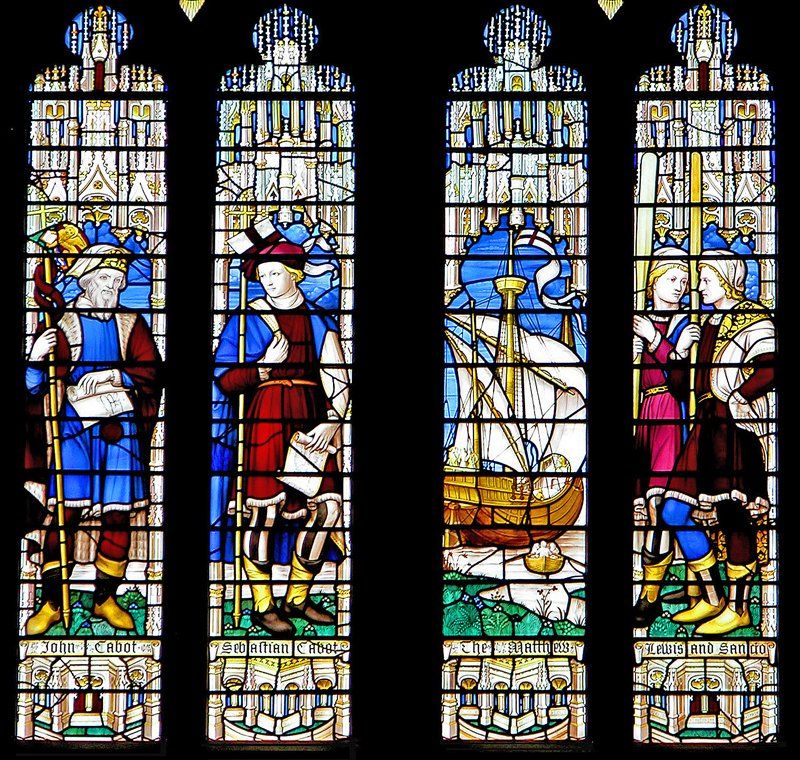
In 1497 John Cabot and his crew set out from Bristol in the little wooden ship “The Matthew” - a journey that is commemorated in the church.

William Canynges of Redcliffe Street - merchant, five-times Mayor of Bristol, its MP and a principal benefactor of St Mary Redcliffe.
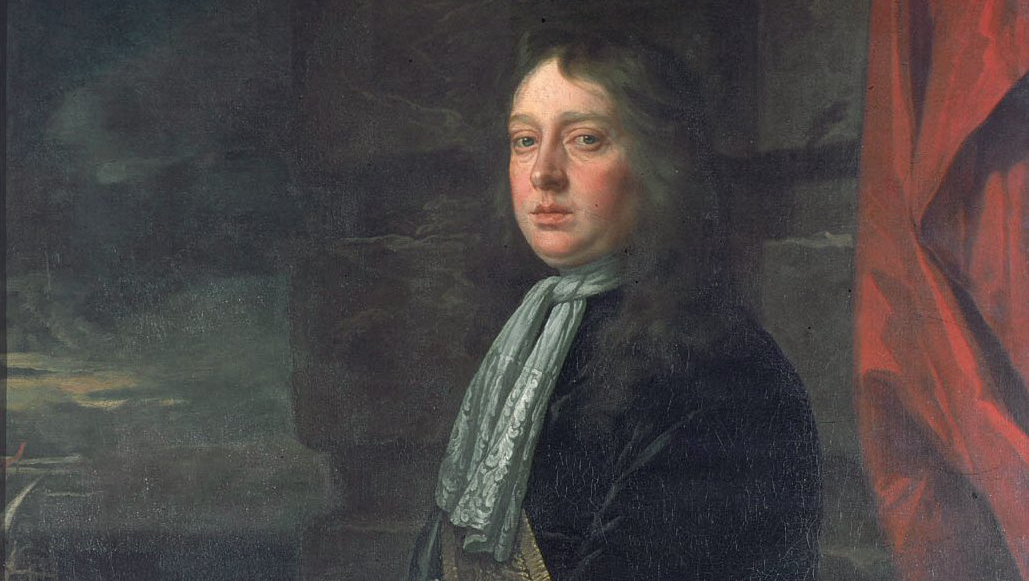
Admiral William Penn, whose son The Quaker William Penn founded Pennsylvania, is buried near the crossing of the church. His armour and pennants hang at the west end of the nave.

The "marvellous boy" poet Thomas Chatterton is closely associated with St Mary Redcliffe. He was inspired to write his medieval style verse by the gothic splendour of the church, where members of his family had been sextons for generations.
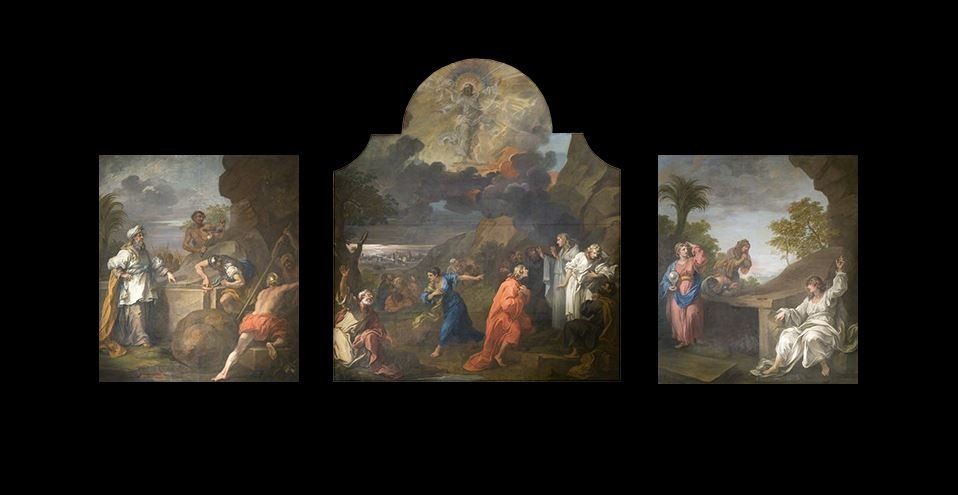
In 1755 William Hogarth, the greatest English painter of his age, was commissioned by the Vestry of St Mary Redcliffe to paint a vast altarpiece.
Parts of the church
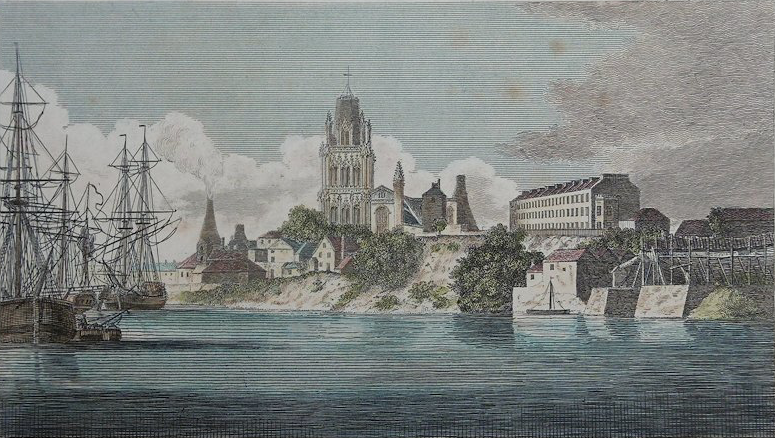
For 400 years, until the 1870s and the culmination of the Victorian restoration of the church, St Mary Redcliffe has no spire, it having been destroyed by lightning in the late 1400s.

The south churchyard has a rich and fascinating history, from the medieval era, through to the industrial revolution and beyond to the Second World War.
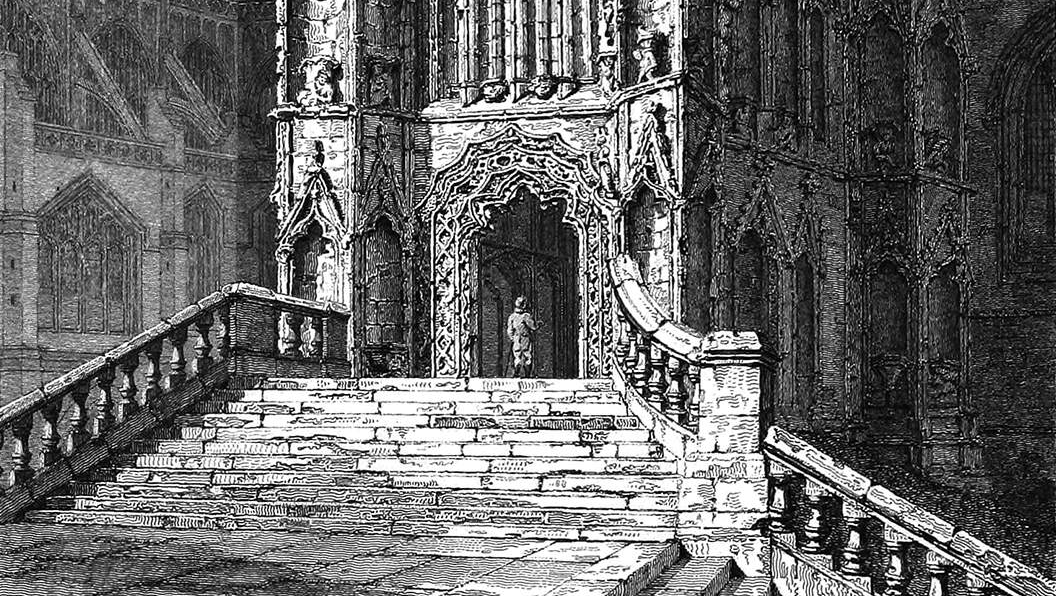
The North Porch is one of the most fascinating features of St Mary Redcliffe. Effectively a porch in front of a porch and one of the very few hexagonal porches in England, it displays eastern influences in its detailing.
Historical features

Find out about the wonderful stained glass windows in the church, from the remaining medieval fragments in St John's Chapel to Harry Stammers' magnificent modern glass in the Lady Chapel.
Old pictures
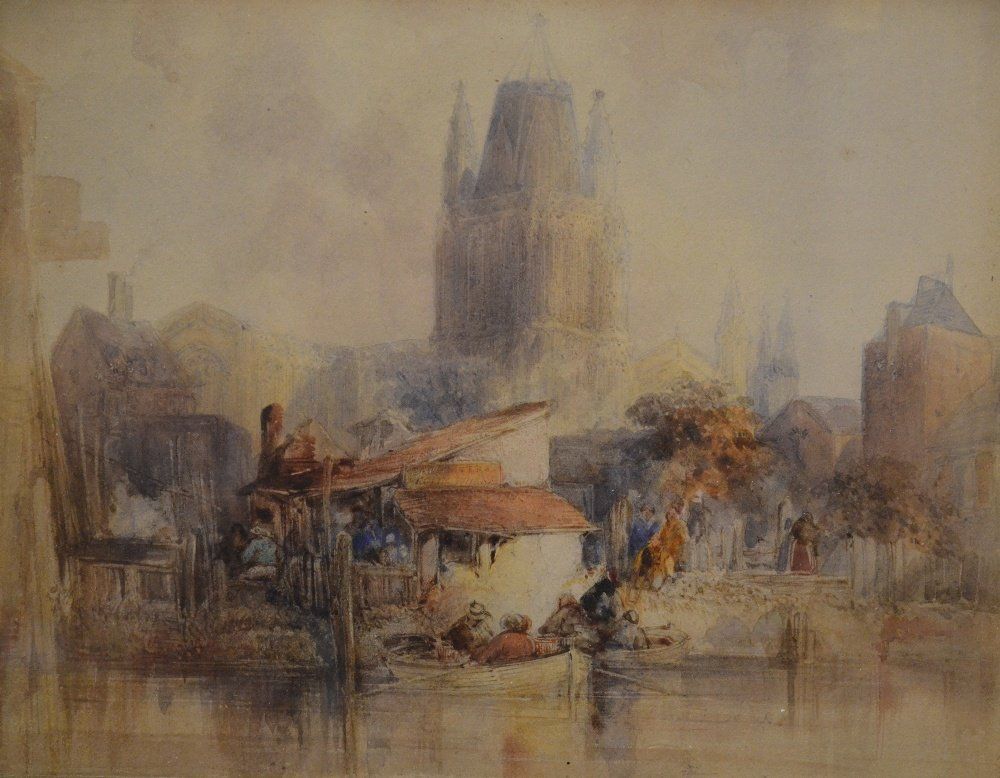
Old picture of the day: a painting of St Mary Redcliffe without its spire, viewed from the north west.
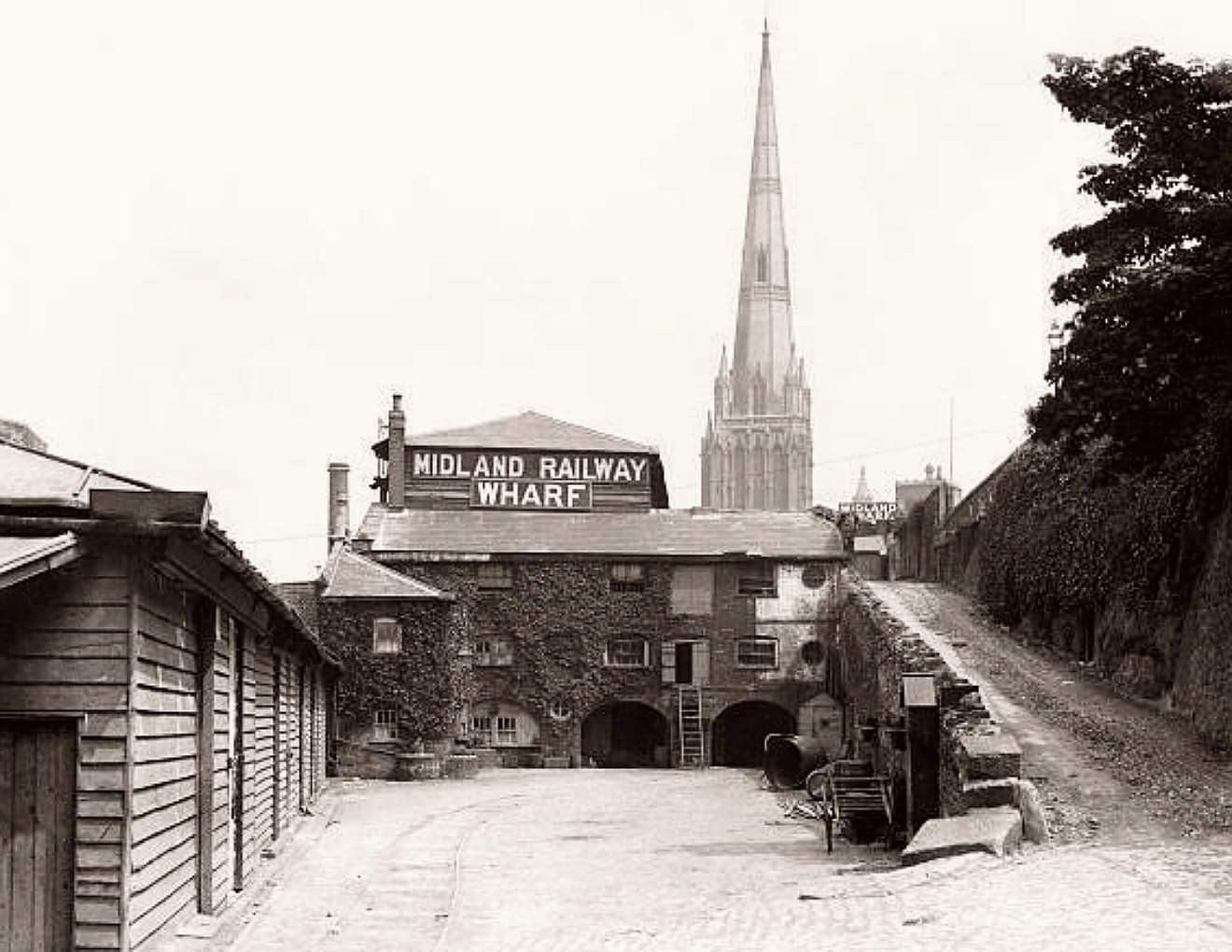
A historical photograph of Midland Railway Wharf (now known as Redcliffe Wharf) with the spire of the church in the distance.

Rush Sunday 1910. A wonderful photograph showing the arrival of the Lord Mayor's carriage beneath the north entrance to the church.
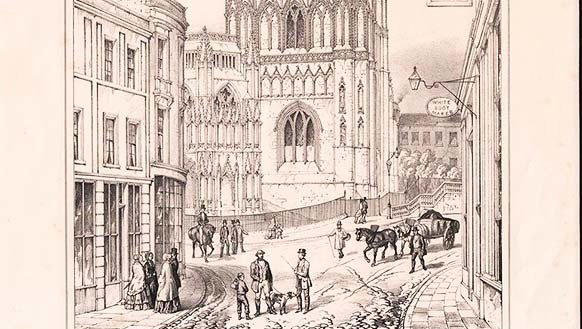
An 1858 lithograph of the church from Redcliffe Street
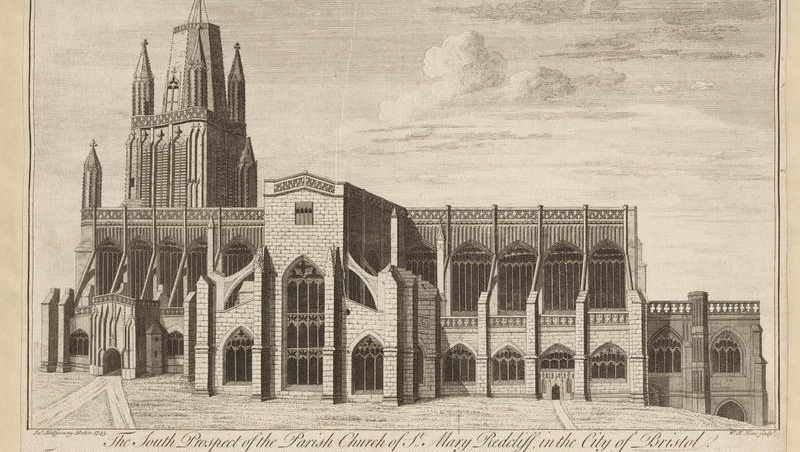
A C18th view: 'The South Prospect of the Parish Church of St. Mary Redcliff, in the City of Bristol, 1745.'

Old picture of the day: A Tudor map of Bristol showing St Mary Redcliffe Church

An old image of St Mary Redcliffe church in Bristol, showing William Edney's iron gates and William Hogarth's altarpiece.